Digital Pressure Gauge UK: Accuracy, Calibration and Real Value
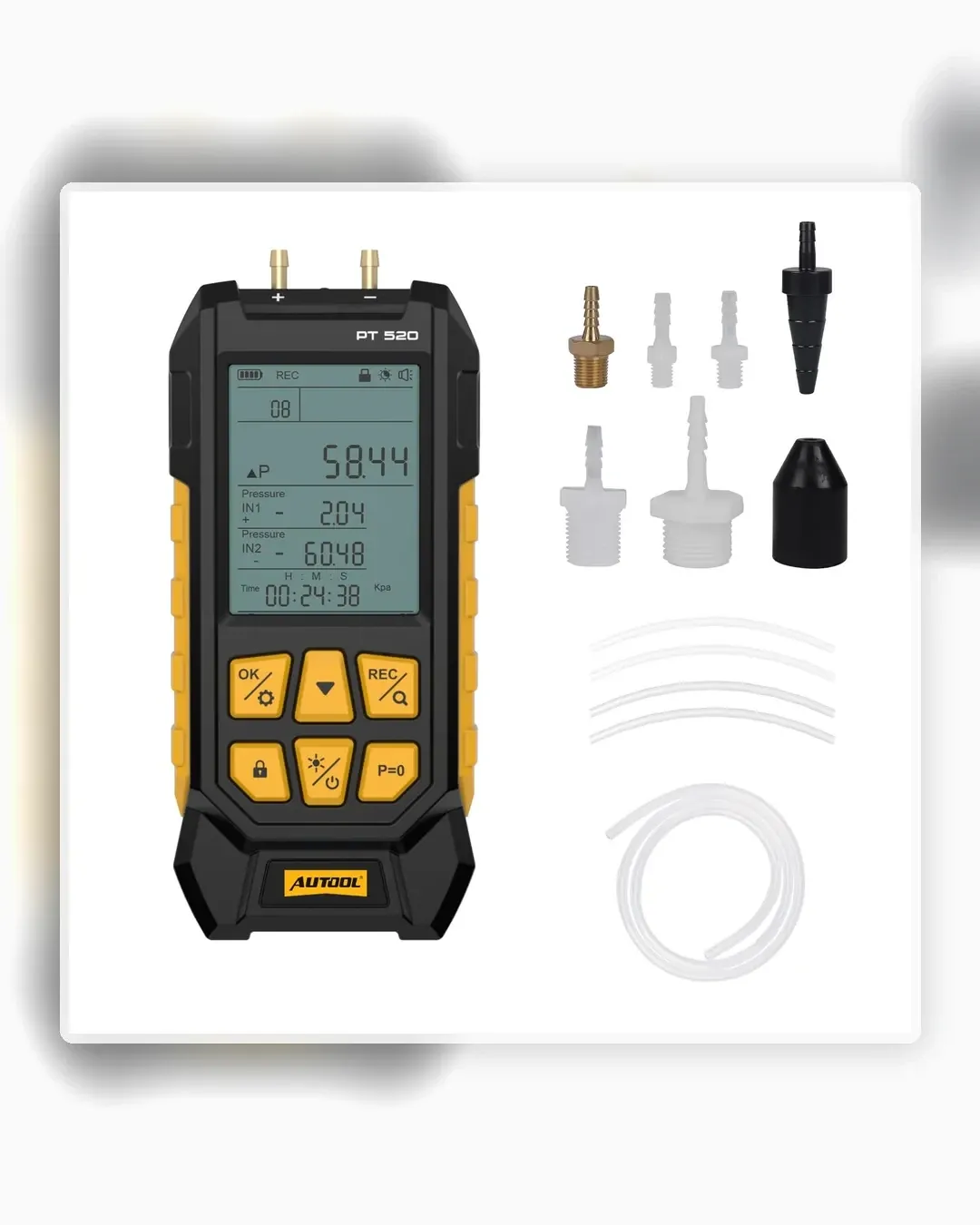
TL;DR: A digital pressure gauge measures pressure with an electronic sensor and shows a precise number, which removes the parallax and settling delays of an analogue dial. If you are weighing a budget unit against a premium brand, the decision comes down to three things you can actually check: what the accuracy figure means at your working pressure, whether resolution is fine enough, and whether calibration is evidenced. The ManometerGas digital gas manometer quotes ±0.3% FS over −100 to 200 kPa for £121.15 — this guide shows how to sanity-check that against a premium alternative before you spend.
Key takeaways
- ±0.3% FS is a full-scale figure: on a 200 kPa range that is about ±0.6 kPa (±6 mbar) in absolute terms, whatever pressure you read.
- Accuracy and resolution are different things — a gauge can be repeatable to a fine step yet carry a wider absolute tolerance.
- Ask for calibration evidence; if none is stated, cross-check against a known-good gauge during a return window.
- A £121.15 gauge can be the right buy for trade work; premium brands mainly add certified calibration, tighter accuracy and service backup.
What is a digital pressure gauge?
A digital pressure gauge uses a pressure sensor (typically a piezoresistive element) whose electrical output changes with applied pressure. The electronics convert that into a reading on a display, usually with extras an analogue dial cannot offer: switchable units, a ZERO function, HOLD, and often min/max capture. For low-pressure gas and airside work, reading a number beats interpolating a needle in a dim plant room.
What ±0.3% FS accuracy actually means
This is where sceptical buyers are right to slow down. "FS" means full scale, so the tolerance is a percentage of the instrument's range, not of your reading. On a gauge with a 200 kPa full scale, ±0.3% FS is ±0.6 kPa — about ±6 mbar — and that same ±6 mbar band applies whether you are reading 200 kPa or 20 mbar. At the top of the range it is trivial; at a 20 mbar boiler reading it is proportionally larger, which is exactly why full-scale accuracy alone does not tell you if a gauge suits low-pressure work.
The practical takeaway: for low-mbar readings, judge a gauge on resolution and repeatability for spotting change, and treat the absolute figure as the honest ceiling on how close to "true" any single reading is.
Resolution versus accuracy
Resolution is the smallest change the display can show; accuracy is how close the reading is to the real value. A gauge can resolve a fine step and still carry a wider accuracy tolerance — useful, because many field jobs (a tightness test, a filter-drop trend) care about the change in pressure rather than its absolute value. The ManometerGas listing publishes ±0.3% FS but not a separate resolution figure, so if resolution matters for your work, confirm it with the seller rather than inferring it from the accuracy number.
Calibration evidence and durability
For a lesser-known brand, two questions decide trust. First, calibration: is a traceable certificate supplied, and what is the recommended recalibration interval? The listing does not state a certificate is included, so ask — and if your recording standard needs traceability, budget for a UKAS-traceable calibration. Second, durability: a van tool gets dropped and chilled. A 12-month UK warranty and a UK returns path (this unit has both, plus a 30-day return window) matter more day to day than a spec-sheet decimal place.
The fair, sceptic-friendly approach is to buy on the return window, then run the new gauge alongside a reference you trust on real jobs before it becomes your primary instrument.
£121 gauge versus premium brands
Premium instruments from established metrology names (for example Testo or Fluke) typically cost several times more. What you pay extra for is usually a supplied calibration certificate, tighter published accuracy, documented service and, sometimes, ruggedisation. What you often do not need for domestic and light-commercial work is that full package. At £121.15 the ManometerGas digital gas manometer covers −100 to 200 kPa, 11 units, ZERO/HOLD and dual P1/P2 ports — the functional set most trade jobs use — provided you accept the caveats above and verify what matters to you. (We name premium brands only for context; we do not quote their specs or prices here.)
For the differential-measurement side see our differential pressure gauge guide; for the U-gauge-replacement angle see the digital manometer guide; and to compare testers overall, the gas pressure tester buying guide.
Frequently asked questions
What does ±0.3% FS accuracy mean on a digital pressure gauge?
FS means full scale, so the tolerance is a percentage of the gauge's range, not of your reading. On a 200 kPa range, ±0.3% FS is about ±0.6 kPa (±6 mbar), and that band applies at any reading — which is why full-scale accuracy alone does not tell you whether a gauge suits low-mbar work.
Is a digital pressure gauge accurate enough for low mbar gas readings?
For everyday inlet, working and burner pressure checks, yes — but judge it on resolution and repeatability for spotting change, and treat the ±% FS figure as the ceiling on absolute accuracy. Cross-check against a known-good gauge when a single reading is critical.
Do digital pressure gauges need calibration?
Yes. Sensors drift over time, so periodic calibration keeps readings trustworthy. Ask whether a traceable certificate is supplied and what recalibration interval the maker recommends; if traceability is required for your records, budget for a UKAS-traceable calibration.
How does a £121 digital pressure gauge compare with premium brands?
Premium instruments usually cost several times more and add a supplied calibration certificate, tighter published accuracy and documented service. For domestic and light-commercial work a £121.15 gauge with the right range, units and functions is often enough — provided you verify resolution and calibration for your own use.
Frequently Asked Questions
Are digital pressure gauges more accurate than analogue?
Not automatically — accuracy depends on sensor quality and calibration. However, digital gauges typically offer better display resolution and eliminate parallax reading errors, which improves practical accuracy on site.
What pressure range do UK gas engineers need?
Most boiler and gas appliance work involves low pressures measured in millibars or kilopascals. Choose a gauge whose range places your typical readings in the middle third of the scale for best resolution.
How often should a digital pressure gauge be calibrated?
Follow manufacturer guidance and any scheme requirements for your work type. As a rule, instruments used for compliance records should be checked at least annually, or sooner if dropped or exposed to moisture.
Ready to upgrade your diagnostics with ManometerGas?
ManometerGas digital gas manometer — ±0.3% FS accuracy, -100~200 kPa range. Free UK delivery.
View the Digital Gas Manometer — £121.15