Differential Pressure Gauge UK: A Buyer's Guide for HVAC Balancing
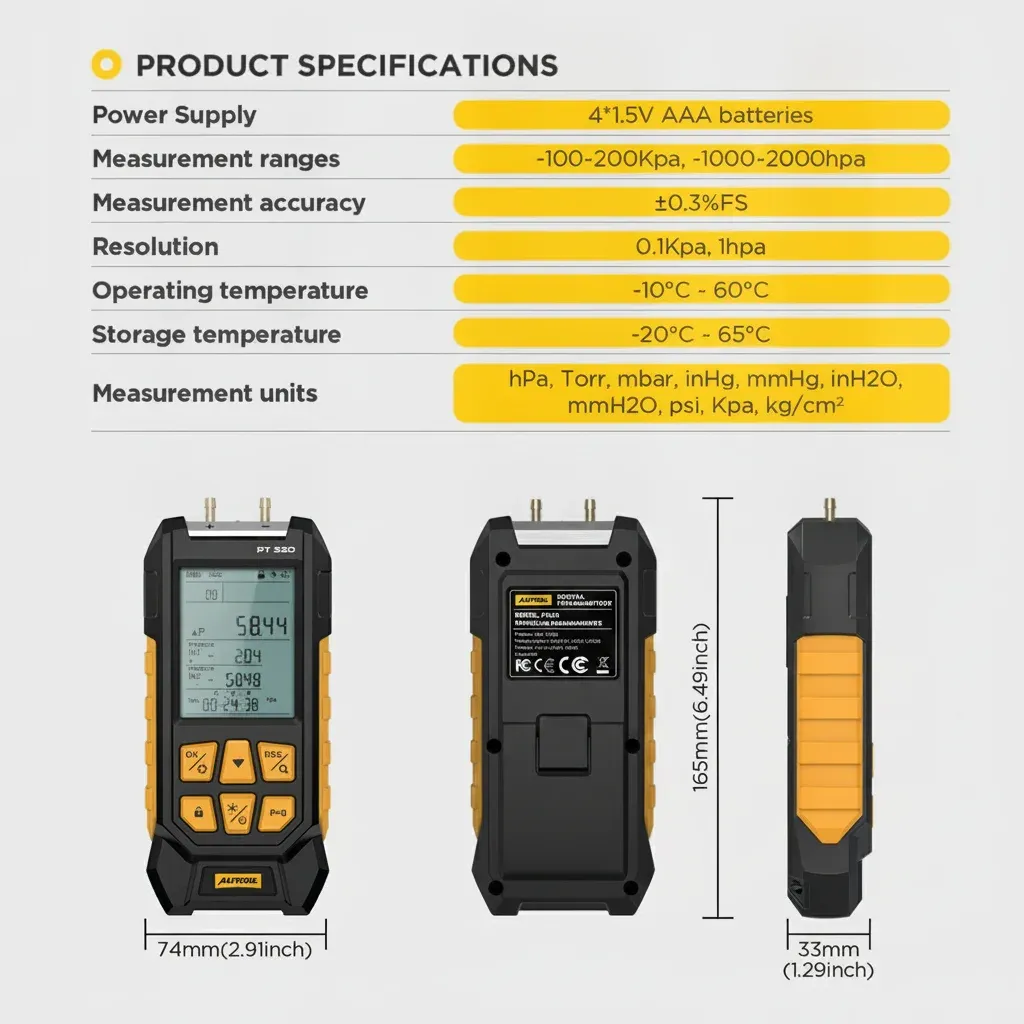
TL;DR: A differential pressure gauge reads the difference between two pressures (P1 minus P2) rather than one pressure against the atmosphere. For UK HVAC commissioning that means measuring duct static pressure, the pressure drop across a filter or coil, and fan performance from a single instrument with two ports. When you are balancing a system before handover, the number that matters is not headline range but usable resolution at low pressure, plus units you can record without converting by hand. The ManometerGas digital gas manometer covers −100 to 200 kPa with ±0.3% FS accuracy, dual P1/P2 ports, ZERO and HOLD, and switchable units (mbar, inH2O, psi, kPa and more) for £121.15.
Key takeaways
- A differential pressure gauge measures P1 − P2, so it reads filter drop, duct static and coil resistance directly.
- For commissioning, judge a gauge on low-pressure resolution and stability, not just its full range.
- Switchable units (inH2O, kPa and Pa) keep your commissioning sheets consistent and cut transcription errors.
- ±0.3% FS on a 200 kPa scale is roughly ±0.6 kPa (about ±6 mbar) in absolute terms — fine for most balancing, but check resolution for very low Pa work.
What is a differential pressure gauge?
A differential pressure gauge has two pressure ports, labelled P1 and P2, and displays the difference between them. A single-port gauge only tells you one pressure relative to atmosphere; a differential instrument answers the question a commissioning engineer actually asks on site — how much pressure is this component dropping?
Connect P1 upstream and P2 downstream of a filter, coil or damper, and the reading is the resistance that element adds to the system. The same two ports let you read duct static pressure, fan total pressure, and the supply-versus-return balance that decides whether a zone is over- or under-supplied.
Where HVAC commissioning engineers use one
On a commercial fit-out heading into snagging and final acceptance, a differential gauge earns its place measuring:
- Filter pressure drop — comparing the clean-filter reading against the manufacturer's change-out figure, so you hand over a system with headroom rather than a filter already near its limit.
- Duct static pressure — confirming the fan is delivering design external static, not fighting a throttled damper.
- Coil and attenuator resistance — isolating which component is eating the fan's available pressure when airflow is short.
- Supply/return balance — proving each branch is within tolerance before the handover meeting, with readings you can defend if a figure is queried.
These are exactly the P1/P2 measurements a commissioning role lives on, and the reason a differential manometer usually replaces two or three single-function tools in the bag.
What to check before you buy
Resolution, not just range
Duct and filter readings are often small — tens or low hundreds of pascals. A gauge with a wide range but coarse resolution will round those readings away. Ask for the resolution figure in Pa, not just the full-scale range, because low-pressure work is where a commissioning gauge is judged. On the ManometerGas unit the honest position is this: the spec sheet quotes ±0.3% FS accuracy but does not publish a separate resolution figure, so if your work routinely sits in single-digit pascals, confirm resolution with the seller before you rely on it.
Units you actually record in
UK commissioning sheets mix inH2O, kPa and Pa depending on the client and the kit. A gauge that switches between all of them — this one carries 11 units including mbar, inH2O, psi and kPa — means you record in the unit the certificate expects instead of converting in your head and risking a transcription slip.
ZERO and HOLD
ZERO the gauge after connecting the hoses so the reading starts from a true null across P1 and P2. HOLD freezes a value while you are up a ladder or behind an AHU panel, so you can note it down once your hands are free.
Honest limits
±0.3% FS referenced to a 200 kPa scale works out to roughly ±0.6 kPa — about ±6 mbar — in absolute terms. For airside balancing that is comfortably fine, but it is not a laboratory micromanometer for sub-pascal research, and it is not a high-pressure hydraulic gauge: at −100 to 200 kPa it is built for low-pressure air and gas, not systems running at hundreds of bar. If you also need accuracy definitions spelled out, our digital pressure gauge guide covers full-scale accuracy and calibration in detail.
A practical option for UK commissioning
If you want one instrument that reads P1/P2, switches units and survives a service bag, the ManometerGas digital gas manometer is a sensible mid-budget choice at £121.15, with free UK delivery, CE/UKCA marking, a 12-month UK warranty and a 30-day return window to check it against your existing kit. Engineers who also test appliances will find the same tool doubles for a gas tightness test, and buyers deciding across a team can read our gas pressure tester buying guide.
Frequently asked questions
What is the difference between a differential and a single-port gauge?
A single-port gauge reads one pressure against atmosphere. A differential gauge reads two pressures at once and shows P1 minus P2, which is what you need for filter drop, coil resistance and duct balancing.
Can one gauge do HVAC balancing and gas work?
Yes, within its range. A −100 to 200 kPa differential manometer with switchable units handles airside commissioning and low-pressure gas checks. For very low pascal research or high-pressure hydraulics you need a purpose-built instrument.
Which units should I record duct readings in?
Record in the unit your commissioning certificate specifies — commonly Pa or inH2O for airside work. A gauge with switchable units lets you match the paperwork rather than converting manually.
Ready to upgrade your diagnostics with ManometerGas?
ManometerGas digital gas manometer — ±0.3% FS accuracy, -100~200 kPa range. Free UK delivery.
View the Digital Gas Manometer — £121.15