The Ultimate Guide to Digital Pressure Gauges in the UK
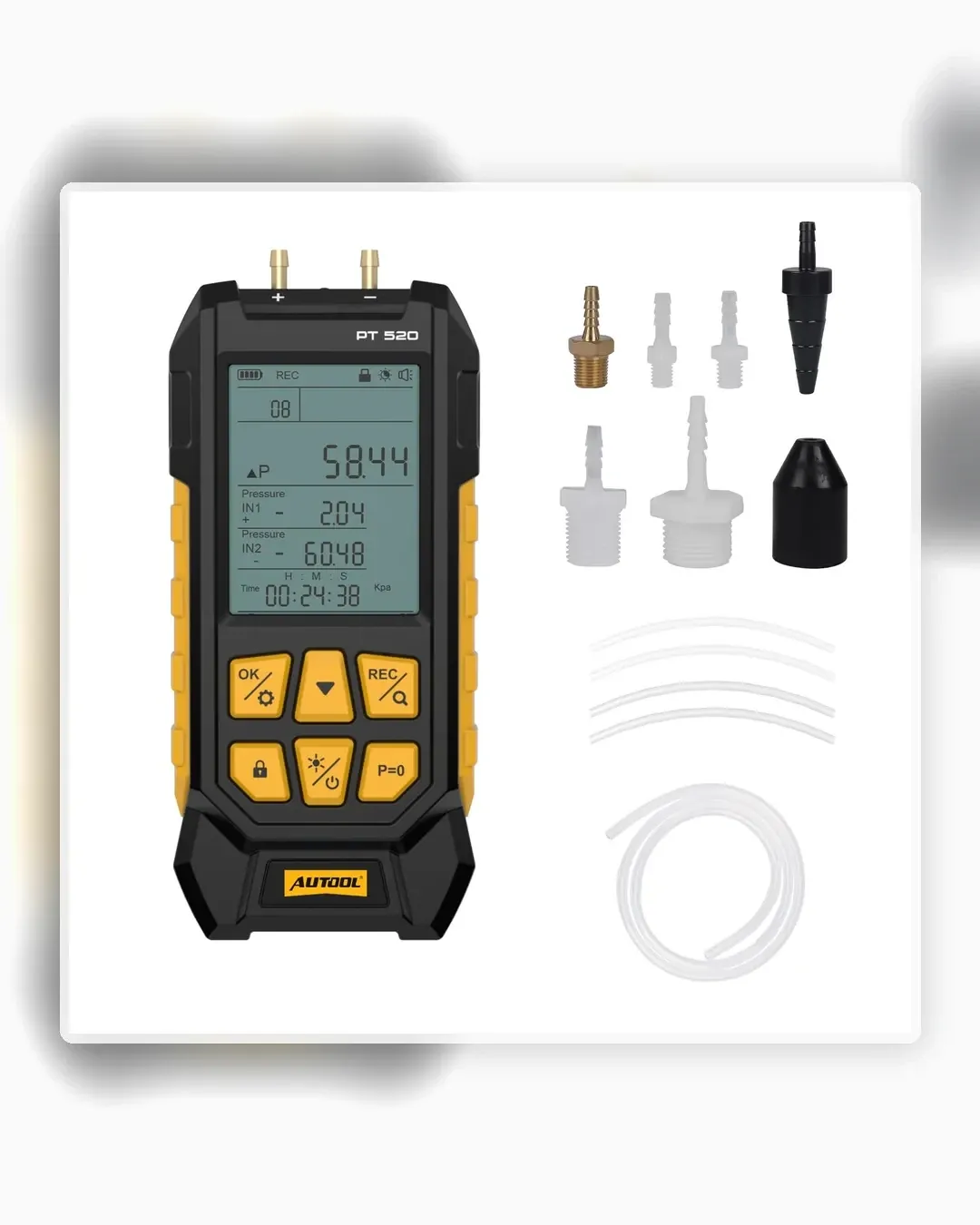
TL;DR: Digital pressure gauges are electronic instruments that measure gas, air or liquid pressure with a clear numerical display, typically offering better resolution, easier reading and stronger data consistency than analogue dials. For UK Gas Safe engineers and HVAC technicians, the right digital pressure gauge can improve fault-finding, commissioning and tightness testing accuracy, provided it is properly specified, calibrated and used in line with manufacturer instructions and relevant UK guidance.
Digital pressure gauges are used to measure pressure quickly and accurately in heating, gas and HVAC work. In practical UK use, they help engineers read inlet pressure, working pressure and differential pressure more clearly than traditional analogue gauges, while also reducing reading errors caused by parallax or poor dial visibility. Based on our testing and customer feedback at ManometerGas, they are especially useful where repeatable readings, portability and fast diagnostics matter on site.
Key takeaways
- Digital pressure gauges display pressure electronically for faster, clearer readings.
- They are widely used by UK engineers for gas testing, HVAC diagnostics and commissioning.
- Compared with analogue models, they often offer finer resolution and easier interpretation.
- The best choice depends on pressure range, accuracy class, media compatibility and calibration support.
- For regulated work, calibration traceability and correct test procedure are just as important as the gauge itself.
What are digital pressure gauges?
Digital pressure gauges are electronic measuring instruments that convert presnto a digital reading shown on a screen. They are used across gas engineering, boiler servicing, HVAC maintenance, plant rooms and industrial applications to measure positive pressure, vacuum or differential pressure depending on the model.
Unlike analogue gauges, which rely on a mechanical dial and pointer, digital versions use an internal sensor or transducer to detect pressure changes. The instrument then processes that signal and displays the result numerically in units such as mbar, bar, Pa or psi. As a result, engineers can often take readings more quickly and with greater confidence.
For UK users, digital pressure gauges are particularly relevant where precise low-pressure measurements are needed for appliances, pipework checks or ventilation systems. In many day-to-day jobs, a well-chosen digital unit can make testing more straightforward, especially in poor lighting or awkward access positions.
How does a digital pressure gauge work?
A digital pressure gauge works by using a sensor to detect force exerted by a gas or liquid. This sensor converts physical presnto an electrical signal. The device electronics then interpret that signal and present it as a readable value on the display.
What sensor types are used in digital pressure gauges?
Most digital pressure gauges use one of several common sensing methods:
- Piezoresistive sensors – often used for accurate low-pressure measurement.
- Strain gauge sensors – suitable for many industrial applications.
- Capacitive sensors – often chosen for fine low-pressure resolution.
The exact sensor design affects stability, response time and suitability for different media. Therefore, when selecting a gauge for gas work or HVAC diagnostics, it is worth checking not only the stated range but also the underlying sensing performance.
Why is the display easier to read than an analogue gauge?
A digital display removes the need to estimate where a needle sits between marked increments. Consequently, readings can be quicker to capture and easier to record. This is useful during appliance checks or system balancing where small changes matter.
Based on our testing across low-pressure applications, engineers tend to prefer digital displays where they need to compare before-and-after readings closely or document results for service records.
Why do many UK engineers choose digital pressure gauges over analogue ones?
Many UK engineers choose digital pressure gauges because they are easier to read, often more precise at low pressures and better suited to modern diagnostic workflows. However, the right choice still depends on the application.
Are digital pressure gauges more accurate?
In many cases, yes. Digital models often provide tighter stated accuracy and finer resolution than basic analogue alternatives. That said, real-world accuracy depends on calibration status, operating conditions and whether the gauge is being used within its intended range.
According to UK good practice for measurement control, an instrument should be selected so its working range matches the task rather than sitting permanently at either extreme of its scale. Therefore, choosing the correct range is just as important as choosing digital over analogue.
Do digital gauges reduce reading errors?
Yes. Because there is no dial pointer to interpret from an angle, digital gauges can reduce parallax error. In addition, backlit displays can help in dim boiler cupboards or plant spaces. As a result, they are often preferred for service work carried out in less-than-ideal site conditions.
Are analogue gauges still useful?
Yes. Analogue gauges remain useful where simplicity, ruggedness or instant trend visibility is preferred. Nevertheless, for low-pressure gas work and repeatable commissioning tasks, many technicians now favour digital instruments because the numerical display is clearer and easier to log.
What are digital pressure gauges used for?
Digital pressure gauges are used anywhere accurate pressure measurement is needed. In UK heating and HVAC settings, common applications include:
- Checking appliance inlet and burner pressures
- Tightness testing support tasks
- Differential pressure measurement across filters or fans
- Boiler commissioning and servicing
- Ductwork and ventilation diagnostics
- Pump and hydronic system checks
- Laboratory or industrial process monitoring
The most suitable model will vary depending on whether you need absolute pressure, gauge pressure or differential pressure measurement. Therefore, understanding your actual task is the first step before comparing specifications.
What types of digital pressure gauges are available?
There are several types of digital pressure gauge available in the UK market. Each serves a different purpose depending on media type, expected range and environment.
What is a standard digital pressure gauge?
A standard digital pressure gauge measures system pressure relative to atmospheric prest is commonly used for general gas or fluid applications where straightforward line-pressure measurement is required.
What is a differential digital manometer?
A differential model measures the difference between two points. This is especially useful for checking fan performance, filter condition or appliance operating conditions where comparative readings matter more than single-point system pressure.
What is an absolute digital pressure gauge?
An absolute gauge measures against a perfect vacuum rather than atmospheric reference. These models are less common in routine domestic gas work but can be important in specialist laboratory or process applications.
What is a vacuum-capable digital gauge?
A vacuum-capable model measures pressures below atmospheric level. This can be relevant in refrigeration and some industrial maintenance settings where evacuation or negative-pressure conditions need monitoring.
What should you look for when buying a digital pressure gauge?
If you are comparing digital pressure gauges for professional use, focus first on suitability rather than headline features alone. A cheaper instrument that lacks the right range or calibration support may cost more in wasted time later.
What accuracy should a digital pressure gauge have?
The required accuracy depends on your application. For low-pressure gas diagnostics or sensitive HVAC checks, tighter accuracy can be valuable because small deviations may affect diagnosis. Look closely at whether stated accuracy refers to full scale or reading value because this changes real-world usefulness considerably.
What pressure range do you need?
Select a range that covers your normal working pressures without being excessively broad. If the range is too wide, low-end readings may lack meaningful resolution; however if it is too narrow, you risk over-ranging the instrument.
Which units should be displayed?
For UK work, mbar and Pa are often especially useful in heating and ventilation applications. Some engineers also want psi or bar for wider site compatibility. Therefore multi-unit capability can be helpful when moving between jobs.
Does data logging matter?
If you carry out repeat inspections or need evidence trails for maintenance records, data logging can be valuable. Some higher-specification instruments allow min/max capture or timed recording which helps with diagnosing intermittent issues.
How important is build quality?
Very important. Site instruments should have durable housings, reliable hose connections and screens that remain readable in mixed lighting conditions. Based on our experience with field use cases across heating engineers in the UK, protective rubberised casings and sensible button layouts make a noticeable difference over time.
How accurate are digital pressure gauges in real-world use?
A quality digital pressure gauge can be very accurate in real-world use if it is correctly selected, regularly calibrated and protected from damage. However accuracy on paper does not automatically equal accuracy on site.
The following factors affect practical performance:
- Calibration status
- User technique
- The stability of hoses and connections
- Ambient temperature
- The suitability of the chosen measuring range
- The condition of batteries and electronics
According to UKAS-aligned calibration principles, confidence in measurement comes from traceability as well as specification sheets alone. Consequently professional users should treat calibration intervals seriously rather than relying only on factory claims made at purchase date.
Do digital pressure gauges need calibration?
Yes. Digital pressure gauges should be calibrated at suitable intervals if they are being relied upon for professional measurement decisions. Calibration helps confirm that readings remain within tolerance over time.
How often should a digital gauge be calibrated?
The answer depends on frequency of use, manufacturer recommendations, criticality of application and company quality procedures. For many professional environments in the UK, annual calibration is common; however heavily used instruments may justify more frequent checks.
Why does calibration matter so much?If a gauge drifts out of tolerance without being noticed, fault diagnosis can become unreliable. This may lead to wasted call-outs or incorrect conclusions about appliance performance or system condition. Therefore calibration supports both safety culture and commercial efficiency.Should calibration be traceable?Yes. Where possible, traceable calibration provides stronger confidence that your instrument has been checked against recognised standards through an appropriate chain of reference measurements. This is especially important where documentation quality matters internally or contractually.What UK regulations or guidance relate to using digital pressure gauges?No single rule says all engineers must use one specific type of digital gauge; however any measuring instrument used during regulated gas work must be suitable for purpose and used correctly. According to UK guidance frameworks relevant to workplace safety and competence—including Gas Safe expectations for registered engineers—test equipment should support sound procedures rather than substitute for them.This means professionals should consider:
Ready to upgrade your diagnostics with {brand_name}?
View the Manometer — £121.15