mbar to kPa conversion manometer UK
For mbar to kPa conversion manometer UK work, the fixed relationship is simple: 1 mbar equals 0.1 kPa, so multiply millibar by 0.1 (or divide by 10) to get kilopascals. On a multi-unit digital gauge you can often switch the display instead of converting by hand, but job sheets still need one agreed unit so readings stay comparable across visits.
Quick conversion table
Use this millibar-to-kilopascal reference when a manometer reading must be recorded in SI-style kPa. The factor below matches the standard conversion of 1 millibar to 0.1 kilopascal.
| mbar | kPa | |
|---|---|---|
| 1 | 0.1 | |
| 5 | 0.5 | |
| 10 | 1.0 | |
| 20 | 2.0 | |
| 50 | 5.0 | |
| 100 | 10.0 |
Pressure measurement practice also distinguishes gauge and vacuum readings and relies on SI pressure units when you convert manometer values between displays. Always note whether a figure is gauge pressure before you compare it with another visit or another instrument.
Switching units on a multi-unit digital gauge
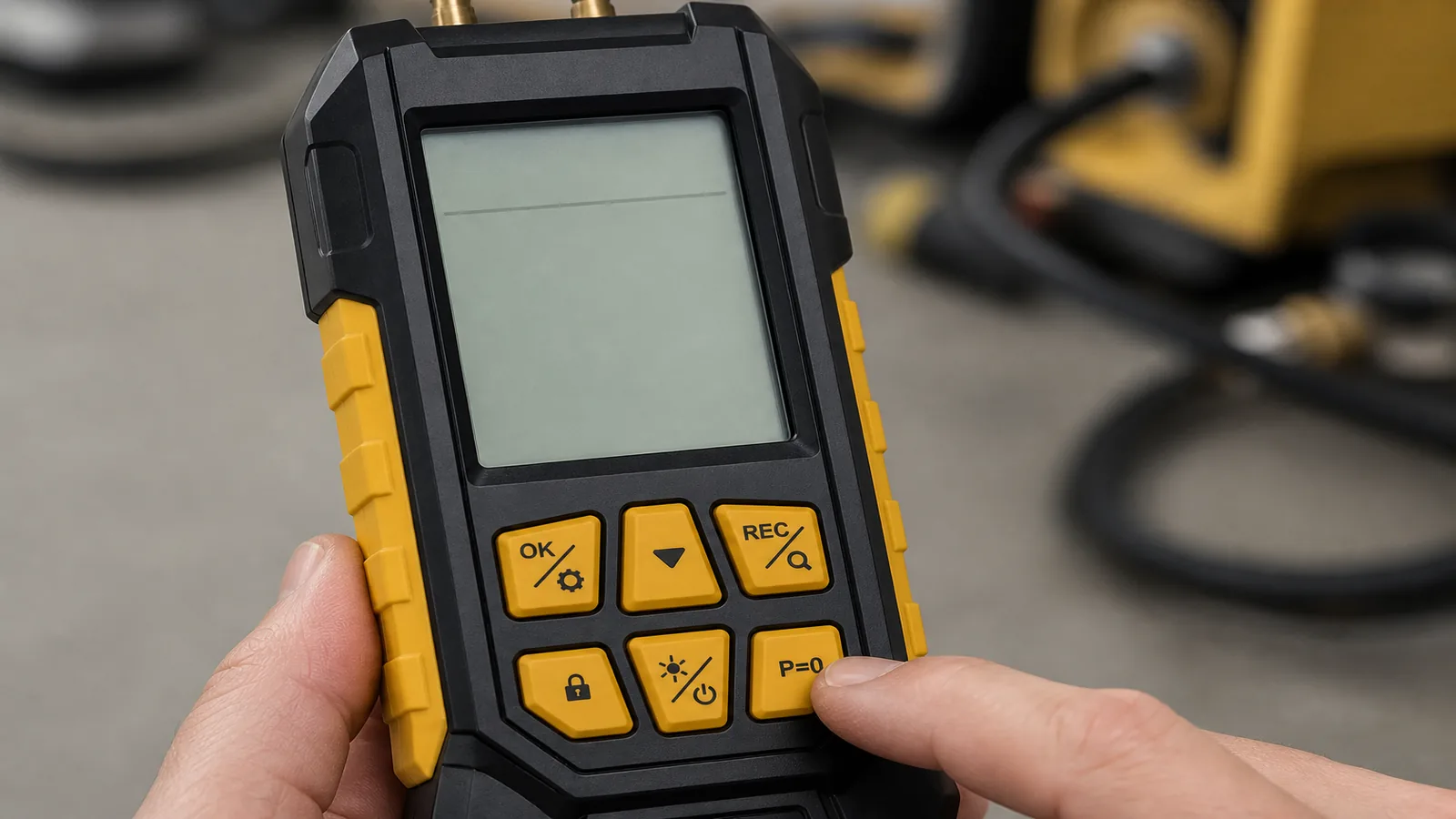
Many digital HVAC and gas differential gauges let you change the on-screen unit without recalculating on paper. Public listing language for the AUTOOL PT520 digital gas manometer / HVAC differential pressure gauge describes multi-unit readout including mbar, psi, kPa and inH2O, among others, within a stated range of -100~200 kPa.
For day-to-day UK heating checks, teams often leave the instrument in mbar because boiler and burner paperwork commonly expects millibar figures. When a worksheet, manufacturer note or overseas schematic asks for kilopascals, switch the gauge to kPa or apply the 0.1 factor above and write both the value and the unit clearly.
If you also need psi to mbar HVAC pressure conversion or an inH2O to mbar digital gauge guide approach, use the gauge’s unit menu rather than mixing handwritten factors mid-job. Confirm the selected unit on the display before you open valves or record a final figure.
Job-sheet consistency tips
- Agree one primary unit for the site (often mbar on UK heating jobs) and stick to it on every visit.
- If a reading must appear in kPa as well, convert with 1 mbar = 0.1 kPa and label both lines.
- Record gauge versus absolute context if your procedure requires it, so later comparisons stay valid.
- Photograph or note the unit shown on the digital display at the moment of the reading.
- When handing over between engineers, state the unit in the first line of the notes so nobody assumes psi or inH2O by habit.
That discipline is a large part of why UK heating prefers mbar readings: shared paperwork, familiar setpoint language and fewer transcription slips when several people touch the same plant.
Common mix-up mistakes
- Treating mbar and kPa as equal — they differ by a factor of ten.
- Writing a number without the unit, then assuming the next person used the same scale.
- Changing the digital unit mid-test and comparing the new screen value with an earlier mbar note.
- Confusing differential (two-port) readings with a single-port gauge figure when ports or hoses differ.
- Copying a psi or inH2O value into an mbar column without converting or reselecting the unit on the gauge.
Gas work in the UK must be carried out by a Gas Safe registered engineer where the law requires it. Owning or using a manometer does not make anyone Gas Safe registered, and this guide does not claim any product confers that status.
Next step
If you need a dual-port digital gas / HVAC differential pressure tester with multi-unit display for field conversion between mbar, kPa and related scales, see the current AUTOOL PT520 digital gas manometer product details. The UK listing notes free UK delivery and a 12-month warranty statement alongside the field kit positioning.
FAQ
How do I convert mbar to kPa on a manometer reading?
Multiply the millibar value by 0.1, or divide by 10. Example: 20 mbar = 2.0 kPa. On a multi-unit digital gauge you may select kPa directly instead of converting manually.
Why do UK heating jobs often stay in mbar?
Millibar remains the everyday language on many UK heating and gas job sheets, so keeping the instrument and paperwork in mbar reduces unit mix-ups. Convert to kPa only when a procedure or document asks for it.
Can I rely on psi or inH2O if my gauge offers those units?
Yes for display convenience, provided every recorded value names its unit. For UK trade notes that expect millibar, switch back to mbar or convert carefully before filing the sheet.
Does a digital manometer replace Gas Safe requirements?
No. Where UK law requires it, gas work must be done by a Gas Safe registered engineer. A pressure instrument is a measurement aid only.